

Property Trends 2026: What to Expect from the UK Housing Market
At a glance: property trends 2026
Is the market more stable in 2026?
Yes. Buyers and sellers are more informed, and confidence is returning without the unpredictability of previous years.
The December 2025 base rate cut to 3.75% encouraged both buyers and sellers who had been waiting for more certainty.
£2m+ sellers are beginning to act ahead of the proposed 2028 Mansion Tax, adjusting expectations and timing.
In 2026, buyers are behaving differently. They’re data-led and cautious, relying on sold price data, EPC ratings and time-on-market insights. We've gathered insights from Purplebricks’ regional experts to help you navigate house price forecasts and market shifts this year. We’ll also be continually updating this piece, so rest assured when something changes, you’ll be the first to know.
Are house prices falling in the UK?
No. While there may be short-term fluctuations, Purplebricks’ experts report that most areas are still seeing year-on-year growth. The market has shifted to favour well-priced, realistically presented homes.
Tom Evans, Purplebricks Sales Director for the South of England, says:
“Confidence has returned, but in a more disciplined way. Buyers are far more data-led. Homes priced accurately from the outset are attracting strong early interest.”
This guide brings together expert insight, early signals and practical takeaways to help you navigate what’s next.
What is happening to the property market in 2026?
2026 is off to a more confident start, supported by the December 2025 base rate cut and early signs of renewed market momentum. According to the latest House Price Index, average asking prices rose by 2.8% in January (which is the biggest January jump on record) putting prices 0.5% ahead of where they were this time last year.
Buyer demand surged by 57% in the two weeks after Christmas, while new listings jumped 81%, driven in part by improved affordability as mortgage rates eased. The average two-year fixed mortgage rate is now at its lowest since before the 2022 mini-Budget, with many buyers saving over £100 a month compared to last year.
That said, caution hasn’t disappeared. A third of homes already on the market have had price reductions, and total stock levels are at their highest for this time of year since 2014. Homes that are accurately priced and well presented are generating strong interest. Overpriced listings are sitting still.
In short, market activity is picking up, but success depends on grounded pricing, realistic expectations, and a sharp understanding of what buyers value most in your area.
House price outlook for 2026
Most forecasters agree that 2026 will bring modest but steady house price growth, not dramatic surges. According to the UK House Price Index, the average property price in October 2025 was £269,862 - up 1.7% year-on-year, despite a slight monthly dip of 0.1%. This suggests steady upward momentum, rather than volatility.
Improving affordability is playing a role. Mortgage rates have eased following the December 2025 base rate cut, and wage growth has begun to outpace inflation. These shifts are gradually boosting buyer confidence, but they’re not fueling a return to aggressive bidding. Buyers remain price-conscious, guided by data and less willing to stretch beyond fair value.
As Sales Director Lee Reynolds explains: “House prices are expected to see modest growth, supported by improving affordability. That should help underpin buyer confidence and sustain healthy levels of activity.”
Price realism will matter more than ever
The upshot is that realistic pricing matters more than ever. Homes that reflect local sold data and are well presented are attracting early offers. But overpriced properties are being left behind.
Buyers in 2026 are coming armed with evidence. Thanks to open-access tools like instant valuation calculators and online sold price data they can assess a home’s value in minutes. They know what similar properties nearby have sold for. They know how long a listing has been live. If the price doesn’t align with the data, they’re prepared to wait or walk away.
"Homes priced accurately from the outset are attracting strong early interest," says Tom Evans, Sales Director at Purplebricks looking after the South of England, London and South of Wales “Those priced too optimistically are quickly overlooked."
Green property prices in 2026
A key part of price realism in 2026 is understanding what genuinely affects a home’s value, and energy efficiency is increasingly part of that equation. Buyers are more aware of EPC ratings and what they mean for running costs, long-term investment, and resale potential. Homes with EPC ratings of A to C are attracting more attention and, in some cases, securing modest premiums.
That said, buyers are still pragmatic. If a property needs upgrading, they’ll factor that into their offer, but they won’t overpay. As Purplebricks Sales Director Marc Russel explains: “Buyers will still take on less efficient homes if the price reflects the work needed.”
Regional house price trends
While national trends show modest growth, regional performance varies widely across the UK.
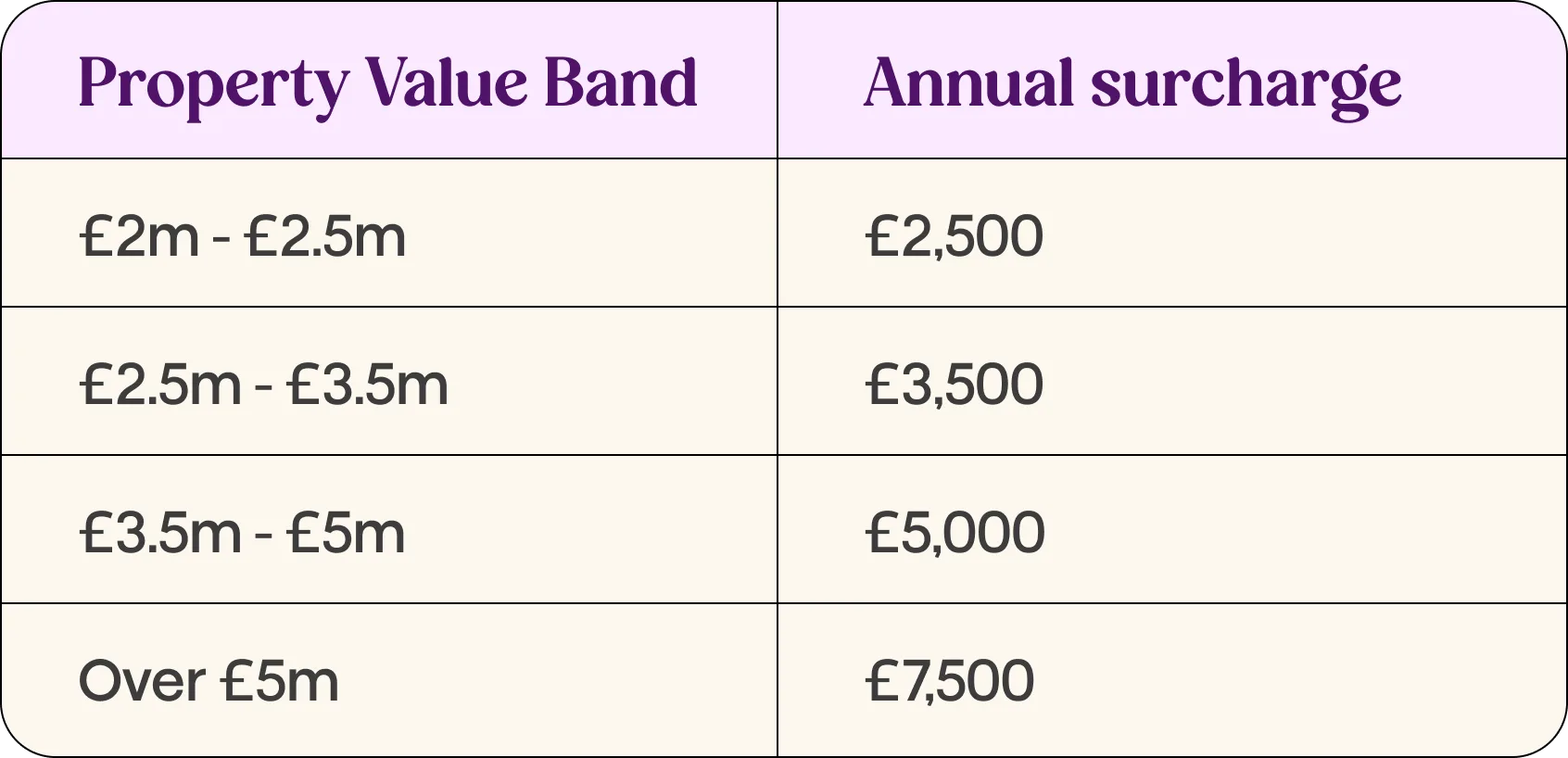
The North East leads in January 2026 with a 7.0% monthly increase and 3.4% year-on-year growth, bringing the average asking price to £197,264.
The East of England and London also saw notable monthly rises of 3.0% and 2.8% respectively. Meanwhile, Scotland and the East Midlands recorded slight monthly price drops, despite positive annual growth in Scotland .
Buyer activity continues to centre on urban hubs like Manchester, Liverpool and Leeds, but the real momentum is hyper-local. In Manchester, regeneration zones like HOME Arches and Campfield Markets are generating outsized demand. In Leeds, development in the South Bank area is drawing buyer interest and new listings.
Stock levels remain high in most areas, meaning buyers have more choice, and sellers need to stay realistic to compete locally.
Impact of the December 2025 base rate cut
The Bank of England’s cut to the base rate in December 2025, down to 3.75%, marked a key turning point in the housing market. After a period of hesitation, buyers and sellers who had been holding off due to uncertainty began re-entering the market.
“We’re seeing people who had been holding off because of the Budget return to the market,” says Sales Director Marc Russel. “These are buyers and sellers who delayed due to uncertainty, not a lack of intent.”
Mortgage rates started to ease in response, making monthly repayments more manageable for many. Some buyers were able to revisit previous affordability estimates or re-apply for improved offers. Across the board, there was a clear rise in valuation requests and search activity.
For those looking to understand what they could borrow, rate comparison tools and affordability calculators have become part of the process. These tools are giving buyers more clarity and confidence when re-entering the market.
Affordability trends in 2026
First-time buyers
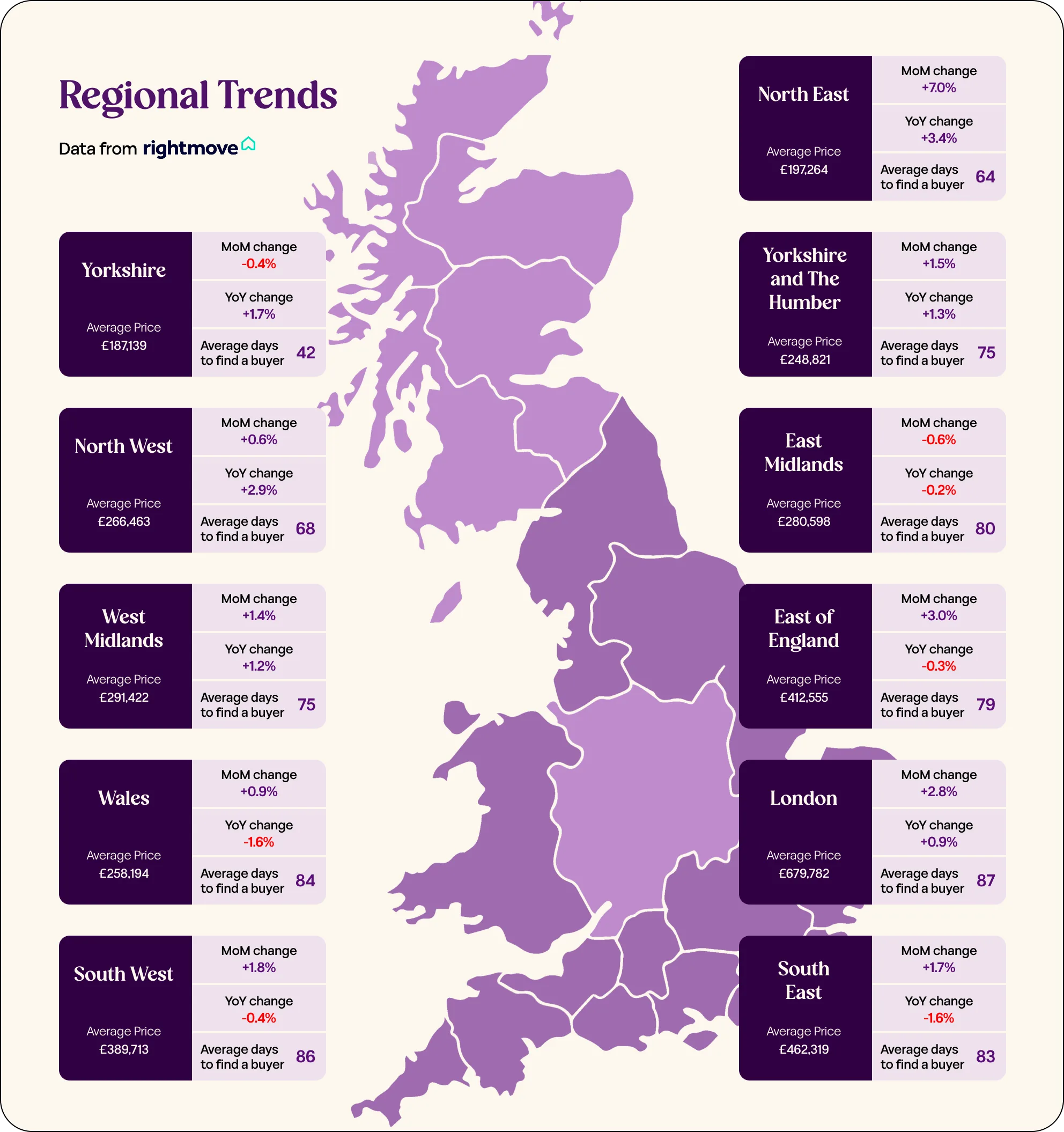
Affordability in 2026 is slowly improving, but it remains tight, especially for first-time buyers.
Thanks to falling mortgage rates, the monthly cost of buying a first home (typically two bedrooms or fewer) has dropped by nearly £120 compared to this time last year. The average two-year fixed mortgage rate is now around 4.5%, down from over 6% in late 2023.
2026 Mortgage Repayment Calculator
However, rising rents are narrowing the gap. The average first-time buyer mortgage payment is now £1,082 per month, while the equivalent monthly rent for the same property type is £1,078 (a difference of just £4!). For many, buying makes financial sense long term, but saving for a deposit remains a challenge.
Younger buyers are getting creative. Research from Purplebricks Mortgages reveals that 84% of 18–24-year-olds would consider buying a home with a friend to get their foot on the ladder.
Top-end market trends
For properties valued over £2 million, 2026 brings a growing sense of strategic planning. The government’s confirmed High Value Council Tax Surcharge, often referred to as the Mansion Tax, is due to come into effect in 2028, and it’s already starting to shape seller behaviour.
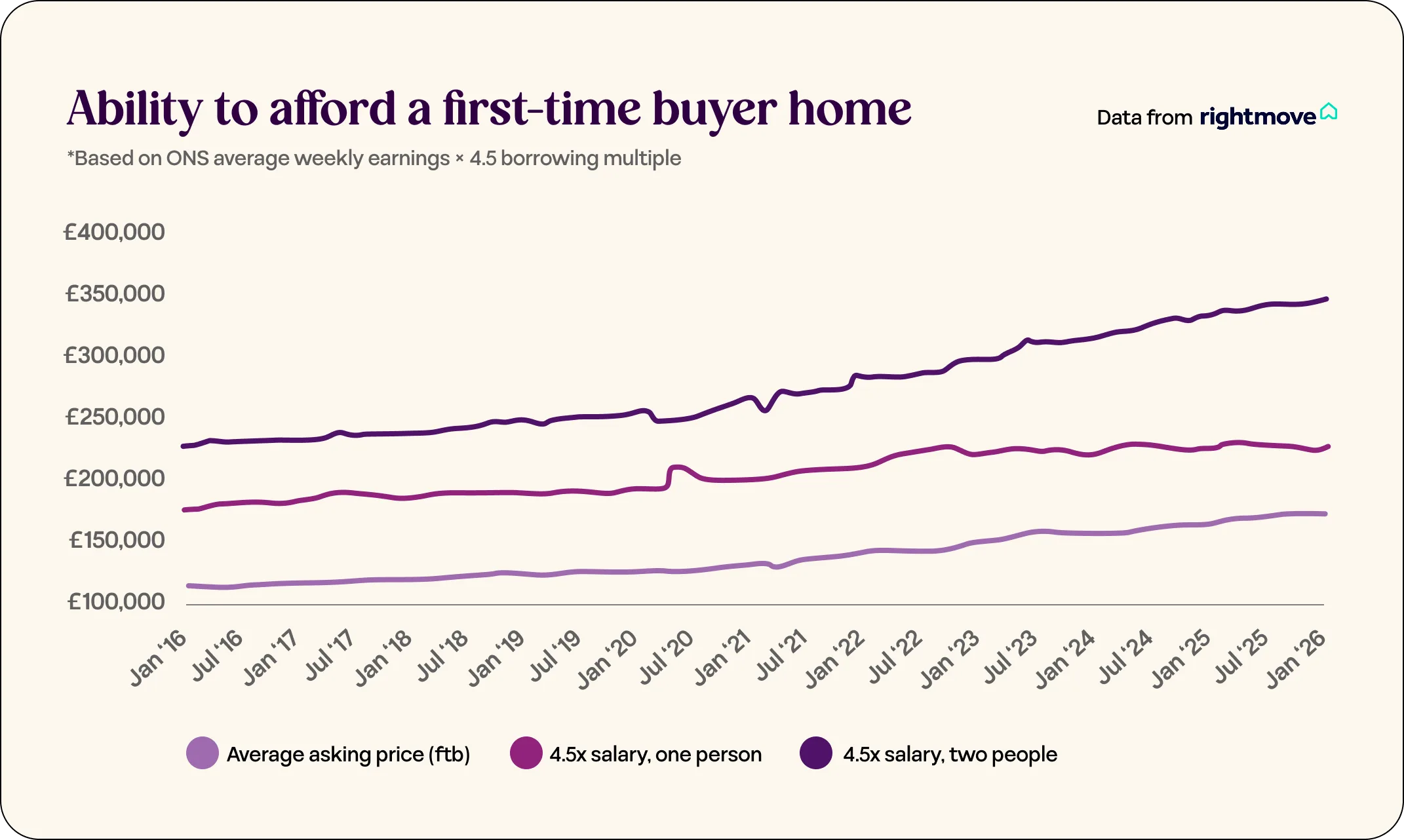
The new charge will apply to properties in England valued above £2 million, based on 2026 assessments by the Valuation Office Agency. It will be charged annually, on top of existing council tax, with tiered bands as follows:
Property Value Band | Annual Surcharge |
£2m–£2.5m | £2,500 |
£2.5m–£3.5m | £3,500 |
£3.5m–£5m | £5,000 |
Over £5m | £7,500 |
The Treasury expects the measure to apply to fewer than 1% of homes in England, with the majority located in London and the South East. According to the Office for Budget Responsibility (OBR), it could lead to “price bunching”, where sellers intentionally price just below surcharge thresholds to avoid higher annual fees.
Purplebricks Sales Director Marc Russel says: “If a move is on the horizon, plan early rather than be forced into a decision later.”
In 2026, we’re already seeing some sellers in the £2m+ bracket adjusting expectations and weighing up timing more carefully. Those planning to sell in the next two years are starting to act now, while the market remains stable and buyer interest remains steady.
Explore the Purplebricks Mansion Package if you’re looking to sell a high-value home without high fees.
Thinking of moving in 2026?
Property trends in 2026 point to a more stable, informed market. Whether you’re buying or selling, the key is to be prepared, priced right, and data-aware.
As Sales Director Lee Reynolds puts it: “Overall, 2026 is shaping up to be a constructive year for the housing market. It offers buyers more opportunity and stability, and gives sellers confidence that, with the right approach, there is still strong demand for well-priced homes.”
Book your free valuation or contact Purplebricks to speak to a local expert.
FAQs about the UK property market in 2026
Most experts expect modest growth of around 1–4%, depending on location. The UK House Price Index showed a 1.7% year-on-year increase as of October 2025. Areas like the North East and Yorkshire are showing stronger momentum, while price rises in the South remain more subdued.
Yes — if your home is realistically priced and well presented. Demand has rebounded since the December 2025 base rate cut, but buyers are price-sensitive. Sellers who lead with strong photography, accurate valuations and tidy presentation are seeing the best results.
Buyers are prioritising homes with solid EPC ratings (especially A to C), fair pricing, and minimal immediate work required. Time-on-market, recent sold prices and energy performance all play into decision-making.
Mortgage rates have already eased significantly, with the average two-year fixed rate back below 5%. Further gradual reductions are possible, but big drops are unlikely in the short term. Most lenders and buyers are working from a place of improved stability rather than major gains.
Affordability has slightly improved. Monthly mortgage costs are now close to rental prices. But deposit requirements and price-to-income ratios remain challenging. Most first-time buyers are more cautious, often taking longer to secure the right property.
Yes. The 2028 surcharge is already prompting more strategic behaviour in the £2m+ bracket. Sellers are thinking ahead, and some are listing now to avoid future price sensitivity or “bunching” just below tax thresholds.