

UK House Price Index Update: August 2026
The latest UK House Price Index reveals how the property market performed in June, with house prices continuing to rise, but at a slower pace than earlier in the year. Here’s what the latest figures could mean for buyers and sellers.
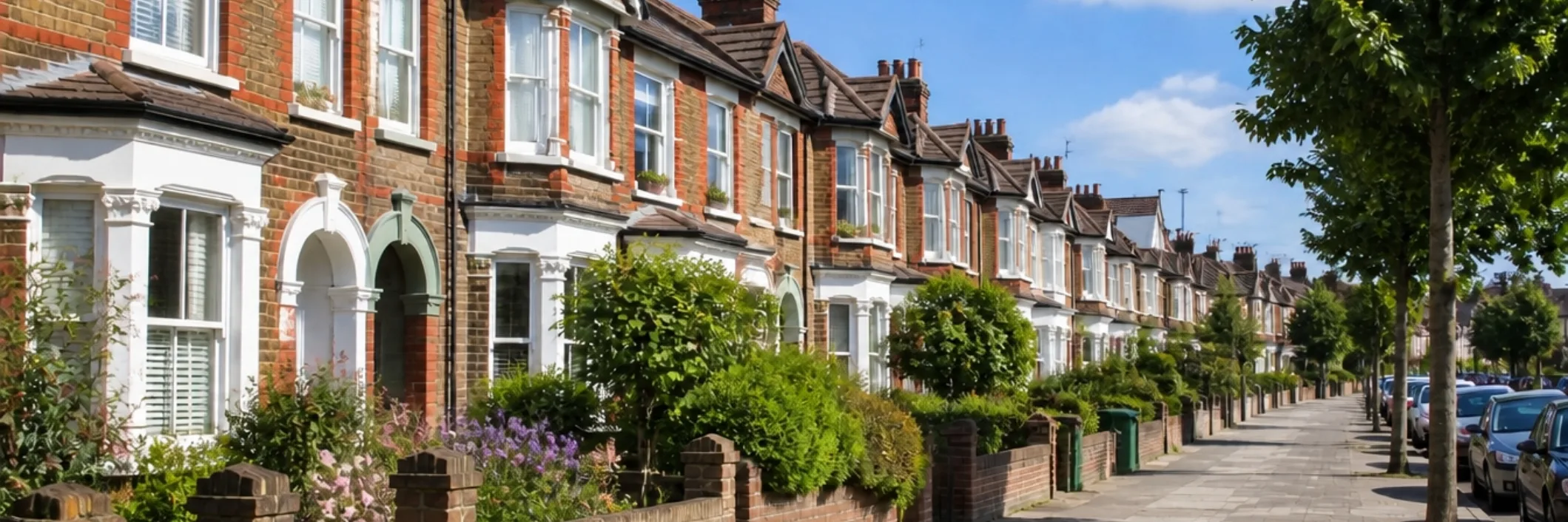
The latest UK House Price Index has just landed, giving us a fresh look at how the property market performed in June. House prices continued to rise, although growth slowed again compared with earlier in the year.
Average UK house prices increased by 0.1% between May and June, taking the average property value to £272,000. On an annual basis, prices are now up 2%.
That’s down from the revised 3% annual growth recorded in May, so the market is still moving, just at a more measured pace.
Here are the latest headlines.
What’s happened to UK house prices?
According to HM Land Registry, the average UK property was worth £272,000 in June 2026.
Prices rose by 0.1% month-on-month and 2% compared with June last year.
Transaction levels also remained fairly steady. Around 99,000 residential property transactions took place in June, which was 2.5% higher than the same month in 2025.
So, while price growth has eased, buyers and sellers are still active.
What’s happening in England?
In England, the average house price reached £293,000 in June.
That’s a monthly increase of 0.2% and an annual rise of 1.8%.
As usual, the national figure only tells part of the story, with some regions performing much more strongly than others.
The North West recorded the strongest annual growth at 4.7%, followed by the North East at 4.3%.
London remained the weakest-performing region annually, with prices down 2.5% compared with June 2025. However, the capital did record a 1% monthly increase.
The East Midlands saw the biggest monthly fall, with prices down 0.7%.
The regional picture
The latest figures continue to show a clear difference between more affordable northern markets and higher-priced areas in the South.
The North West is now leading annual growth, while the North East also remains strong.
Yorkshire and the Humber recorded annual growth of 3.6%, while the West Midlands was up 2.6%.
Growth across southern England remained more modest. The South West rose 1.9% annually, while the South East was up just 0.3%.
London continues to move differently from much of the country, with prices still lower than a year ago despite June’s monthly increase.
Which property types are performing best?
Family homes continue to hold up well.
Across England, semi-detached homes recorded the strongest annual growth, rising 3.2%.
Terraced homes were up 2.8%, while detached properties increased by 2%.
Flats and maisonettes were the only property type to fall, with average prices down 2.3% compared with June 2025.
That follows the same pattern we’ve seen in recent months, with buyers continuing to favour homes that offer more space and flexibility.
What does this mean for buyers?
For buyers, the latest figures suggest the market remains relatively steady.
Prices are still rising nationally, but not at the pace we saw earlier in the year. That may give buyers a little more breathing space, particularly in areas where growth has slowed.
Regional differences also remain important. Buyers in London and parts of the South may find more room to negotiate, while demand remains stronger in parts of the North West and North East.
What does this mean for sellers?
For sellers, the market is still moving, but pricing remains key.
Buyers are active, but they’re also careful about what they’re willing to pay. Homes that are priced realistically for their local market are likely to stand out more than those based on national headlines alone.
If you’re thinking about selling, local demand, recent sold prices and the condition of your property should all play a part in setting your asking price.
The bottom line
June’s HPI points to a housing market that’s still growing, but doing so more slowly.
Average UK prices are up 2% compared with last year, transaction levels remain slightly higher, and family homes continue to perform well.
At the same time, regional differences are becoming more important, with stronger growth in parts of the North and softer conditions in London.
If you’re thinking about moving, understanding what’s happening in your local area is still the best place to start.
You can book your free house valuation with Purplebricks to see what your home could be worth in today’s market.